Vehicle Excise Duty (VED), the tax most of us simply call car tax or road tax, is going up again from 1 April 2026. Whether you drive a petrol hatchback, a diesel SUV or an electric vehicle, these changes will affect what you pay. In this guide, we break down every new rate, explain how the system works and show you how to plan ahead if you’re buying or selling a used car.
What Is Vehicle Excise Duty (VED)?

Vehicle Excise Duty is the annual tax you must pay to keep a car or van on UK public roads. Administered by the DVLA, it is commonly known as car tax, road tax or vehicle tax. Almost every vehicle on the road must be taxed, the few exceptions include vehicles registered to drivers with a qualifying disability, cars declared off-road with a SORN and historic vehicles over 40 years old.
How much you pay depends on several factors: when the car was first registered, its CO₂ emissions, its fuel type and, in some cases, its original list price. The system is split into different registration eras, each with its own rules which is why checking before you buy is so important.
Key Car Tax Changes from 1 April 2026
The Government adjusts VED rates annually in line with the Retail Price Index (RPI). Here are the headline changes taking effect this April:
- Standard annual rate rises to £200: up from £195. This flat rate applies to most cars registered after April 2017, once they’ve passed their first year of tax.
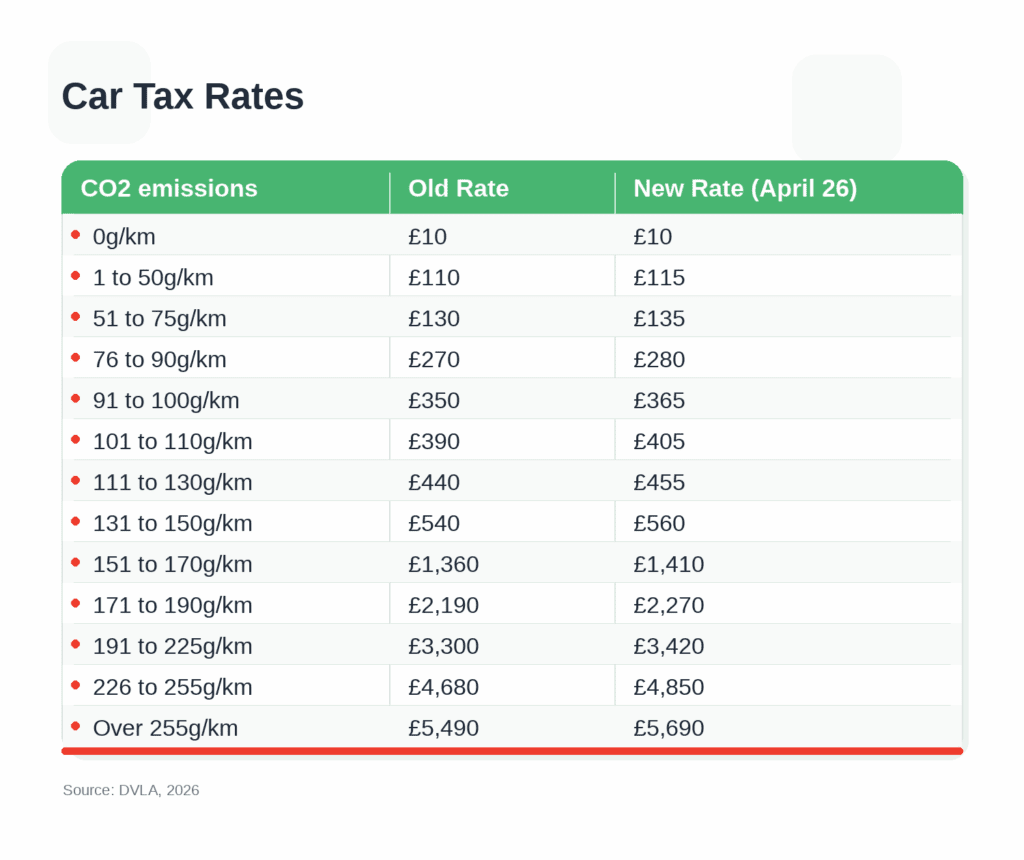
- First-year rates increase across the board: the first-year VED charge for new cars is based on CO₂ emissions. High-emission vehicles (over 255 g/km) face a first-year charge of £5,690, up from £5,490 in 2025.
- EVs now pay car tax: the zero-rate exemption ended in April 2025. From April 2026, new electric cars pay £10 in their first year and then the £200 standard rate.
- Luxury car tax threshold raised for EVs: the expensive car supplement threshold rises from £40,000 to £50,000 for zero-emission vehicles. Petrol and diesel remain at £40,000. The supplement itself stays at £425 per year for up to five years.
- Company car BiK rate for EVs rises to 4%: up from 3% in 2025/26, affecting employees who use an electric company car for personal journeys.
How Much Is Car Tax in 2026?
For cars registered after 1 April 2017, the vast majority of vehicles on UK roads, the standard annual VED rate will be £200. This flat rate applies regardless of your car’s CO₂ emissions once you’ve passed the first year. It covers petrol, diesel, hybrid and electric vehicles alike.
A £5 rise may sound modest, but it comes on top of increases in insurance, fuel and servicing that are already squeezing household budgets. For anyone buying a new car, first-year costs are where the real sting lies.
First-Year Car Tax Rates for New Cars (April 2026)
If you’re buying brand new, the first-year VED charge is based on the car’s official CO₂ emissions. The cleaner the car, the less you pay. Here is how the expected rates compare:
TABLE
The highest first-year rate hits performance and luxury models, think V8-powered Range Rovers, Ferrari, Bentley, Rolls-Royce, Aston Martin and Mercedes-AMG. Around 59 models currently sit in the top emissions bracket.
The Luxury Car Tax (Expensive Car Supplement) Explained
Any vehicle with a new list price above £40,000 attracts an additional £440 annual surcharge on top of the standard VED rate. This expensive car supplement applies for five years from the second year of registration and crucially, it follows the vehicle, not the owner. That means if you buy one second-hand, you may still have to pay it.
From April 2026, the threshold for zero-emission vehicles rose to £50,000. This is welcome news for buyers of mid-range electric cars, as many popular family EVs sit in the £40,000–£50,000 bracket and will now avoid the supplement entirely, a potential saving of up to £2,125 over five years.
Electric Car Tax in 2026: What EV Owners Now Pay
Part of an electric vehicle’s appeal was its exemption from road tax. That changed in April 2025 when EVs were brought into the VED system for the first time. Here is what electric car owners can expect in the 2026/27 tax year:
- New EVs (registered from April 2025): £10 first-year rate, then £200 standard rate per year.
- Existing EVs (registered April 2017–March 2025): £200 standard rate from April 2026 (up from £195).
- Older EVs (registered before April 2017): £20 per year.
- Company car BiK: Rising from 3% to 4% from 6 April 2026, with incremental rises planned through to 9% by 2029/30.
Despite now paying VED, electric cars remain significantly cheaper to tax than petrol or diesel equivalents, particularly when you compare first-year charges side by side.
Car Tax Rates for Older Vehicles
Cars registered between March 2001 and March 2017
These vehicles are taxed by CO₂ emissions bands (Bands A to M). The band your car falls into is fixed by its registration date and emissions figure, it does not change when rates are updated. Only the price attached to each band rises, typically by a few pounds in line with RPI inflation. You can check which band your car sits in by entering its registration on the DVLA vehicle tax checker.
Cars registered before March 2001
Older vehicles are taxed by engine size rather than emissions. Cars with engines over 1,549cc pay approximately £360 per year (2025/26 rate), while smaller-engined models pay less. These rates will also rise modestly with inflation.
Who Is Exempt from Car Tax?
A small number of drivers are exempt from paying VED:
- Historic vehicles: cars built more than 40 years ago (before 1 January 1986 from April 2026) qualify for £0 VED. You must still register in the historic tax class with the DVLA.
- Disability exemptions: drivers receiving the higher-rate mobility component of DLA, enhanced-rate mobility PIP, War Pensioners’ Mobility Supplement or Armed Forces Independence Payment.
- SORN vehicles: if you declare your car off the road with a Statutory Off Road Notification, no VED is payable.
Looking Ahead: Pay-Per-Mile Tax from 2028
The changes don’t stop here. The Government has announced a new Electric Vehicle Excise Duty (eVED) scheme, set to launch in April 2028. Electric and plug-in hybrid owners will pay an additional charge of 3p per mile on top of standard VED. Based on government estimates, the average EV driver covering 8,000 miles a year would pay roughly £240 annually under this scheme. Mileage is expected to be verified at MOT centres rather than through in-car tracking devices.
For anyone planning their next car purchase, it’s worth factoring in not just what you’ll pay this April, but where VED is heading over the next few years.
Thinking of Buying a Used Car?
Don’t get caught out by hidden costs. A vehicle history report reveals the car’s CO₂ emissions, road tax band, running costs, mileage history, finance status, write-off records and more. MotorCheck is the only car history check provider with a presence in both the UK and Ireland, giving you the best possible coverage and protection.
How Much Is My Car Tax? Common Questions Answered
How much is car tax in 2026?
The standard annual rate is for car tax is £200 for most cars registered after April 2017. First-year rates vary from £10 for electric cars to £5,690 for the highest-emission vehicles.
Do electric cars pay road tax now?
Yes, electric cars pay road tax. Since April 2025, electric vehicles have been subject to VED. New EVs pay £10 in their first year and then the standard £200 annual rate. EVs registered before April 2017 pay £20 per year.

What is the luxury car tax?
The "Expensive Car Supplement" is an additional tax applied to luxury cars. It adds £425 per year to the standard Vehicle Excise Duty (VED) rate for vehicles with an original list price over £40,000 (£50,000 for electric vehicles from April 2026). This tax is applied for five years, starting from the second year of registration, and is tied to the car, not the owner.
What tax band is my car in?
You can check your car’s VED band by entering its registration number on the DVLA’s vehicle enquiry service. A MotorCheck report also includes CO₂ emissions data and the annual road tax figure in the Running Costs section.
When is my car tax due?
Your car tax renewal date depends on when you last taxed the vehicle. You can check the exact date via the DVLA’s online checker. New rates apply to any renewal on or after 1 April 2026.
Will there be a pay-per-mile road tax?
The Government has announced a 3p-per-mile charge for electric and plug-in hybrid vehicles starting April 2028, on top of standard VED. Mileage is expected to be verified at MOT centres.
How much is the first-year car tax on a new petrol car?
The first-year car tax on a new petrol car depends on CO₂ emissions. An average petrol car emitting around 143 g/km will pay approximately £560 in first-year VED from April 2026. Higher-emission models pay substantially more.
Does the expensive car supplement apply to second-hand cars?
Yes. The " Expensive Car Supplement" follows the vehicle. If the car’s original list price was above the threshold and it’s still within five years of first registration, the £425 annual charge applies regardless of what you pay for it.
Buying a used car? Protect yourself with a vehicle history check, the UK and Ireland’s most comprehensive car check, backed by DVLA, DVSA and Police National Computer data, with a £30,000 data guarantee.
 by
by