Where Is the VIN or Chassis Number on a Car?
Quick Answer: On most UK cars, you can find the VIN (Vehicle Identification Number), also called the chassis number, at the base of the windscreen, inside the driver’s door frame, or stamped into the bodywork, engine bay or chassis. It should also appear in the vehicle details section of the V5C logbook. Compare the number on the car with the V5C before you buy: every vehicle registered in the UK should have a unique, stamped-in VIN.
If you are buying a used car, checking the VIN is one of the quickest ways to make sure the vehicle in front of you matches its paperwork. A missing, damaged or mismatched VIN is not something to ignore. Pause the purchase until the seller can provide a clear explanation and the vehicle’s identity can be properly checked.
What is a VIN or chassis number?
A Vehicle Identification Number (VIN) is the unique identity code assigned to a vehicle. In everyday UK use, people often call it the chassis number because it is stamped into the vehicle’s structure. On most modern cars, it is a 17-character combination of letters and numbers. Older, classic and some imported vehicles may have a shorter identification number instead.
A VIN is different from a registration number. A registration plate can change, but the VIN is intended to identify that particular vehicle. It is therefore useful when checking a car’s paperwork, ordering parts, confirming recall information or investigating a vehicle’s history.
Where is the VIN number on a car?
Start with the three locations below. Manufacturers often repeat the VIN in more than one place, so inspect at least two physical locations where possible. The exact position varies by make, model, age and vehicle type.
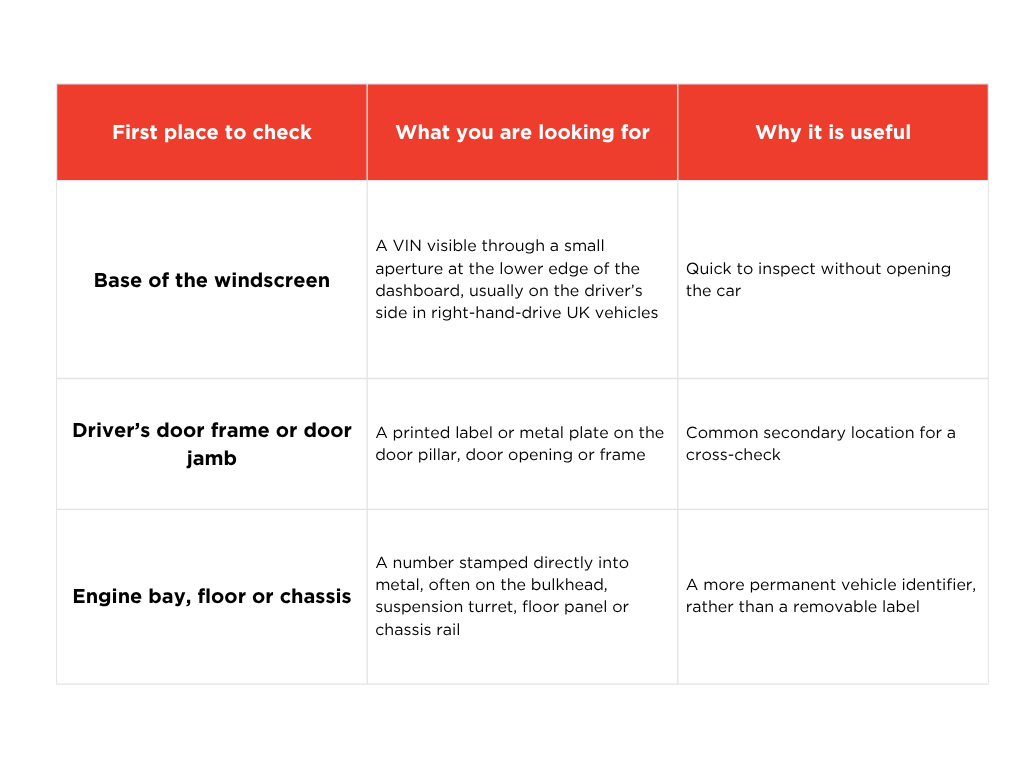
VIN number at the base of the windscreen
Look through the windscreen at the lower corner of the dashboard. Many vehicles have a small viewing window that displays the VIN from outside the car. This is often the fastest place to find the number when you are viewing a used car.
Not every model has a visible windscreen VIN, so do not assume the number is missing if you cannot see one there. Move on to the door frame and the stamped location on the vehicle.
VIN number inside the driver’s door frame
Open the driver’s door and inspect the door jamb, pillar and frame. The VIN may be printed on a tamper-resistant label or displayed on a metal plate. Check both the pillar and the inside edge of the door, as the exact position differs between models.
A sticker alone is not the best place to stop your check. Use it as one comparison point, then confirm that the VIN agrees with the windscreen display or the number stamped into the vehicle.
VIN number in the engine bay, floor or chassis
The most permanent VIN is normally stamped into the vehicle itself. Check the engine bay first, including the bulkhead, inner wing or suspension-turret area. Depending on the vehicle, the stamp may instead be under a trim panel, beneath a flap in the carpet, near a front seat or on a chassis rail.
Use a torch and take your time, but do not scrape, sand or otherwise interfere with the stamped area. If you cannot find it, consult the vehicle handbook or ask a franchised dealer for the correct location for that model.
Where is the VIN on the V5C logbook and other documents?
The VIN is usually shown in the vehicle details section of the V5C registration certificate, commonly known as the logbook. Read every character carefully and compare it with the VIN on the car itself. Do not rely on paperwork alone: a vehicle buyer should inspect the V5C and check the details given against DVLA information.
You may also find the VIN on insurance documents, finance or lease agreements, servicing invoices and manufacturer correspondence. These documents are useful supporting evidence, but the strongest check is a match between the V5C and the permanently stamped number on the vehicle.
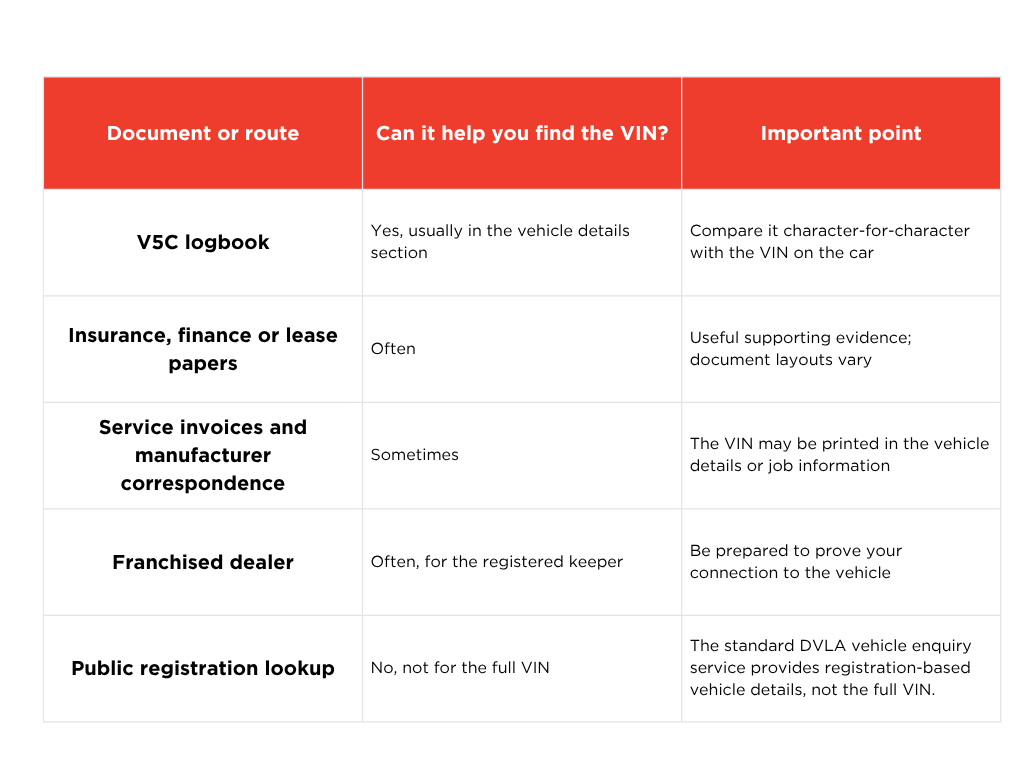
How can I find my VIN number without my car?
If the car is not in front of you, look for the V5C first. Your insurance certificate, finance agreement, lease paperwork, servicing records or a manufacturer invoice may also show the VIN. If you are the registered keeper and cannot find any documents, a franchised dealer may be able to guide you after confirming your identity and connection to the vehicle.
If your V5C has been lost, stolen, damaged or destroyed, use the DVLA route to obtain a replacement. A duplicate logbook may be available online when no details need changing; where changes are needed, or you are not yet the registered keeper, DVLA directs applicants to form V62.
Can I get a VIN from a registration number or number plate?
Not the full VIN through a public registration lookup. You can use a registration number to check certain DVLA-held vehicle details, such as tax, MOT expiry, make-related information and the date the V5C was last issued, but the public service does not return the full VIN.
If you are checking a car before purchase, view the physical VIN and V5C rather than asking a seller to rely on a registration lookup. You can then run a MotorCheck vehicle history check using the registration number to review the vehicle’s recorded history alongside your physical checks.
Is a VIN the same as a chassis number or engine number?
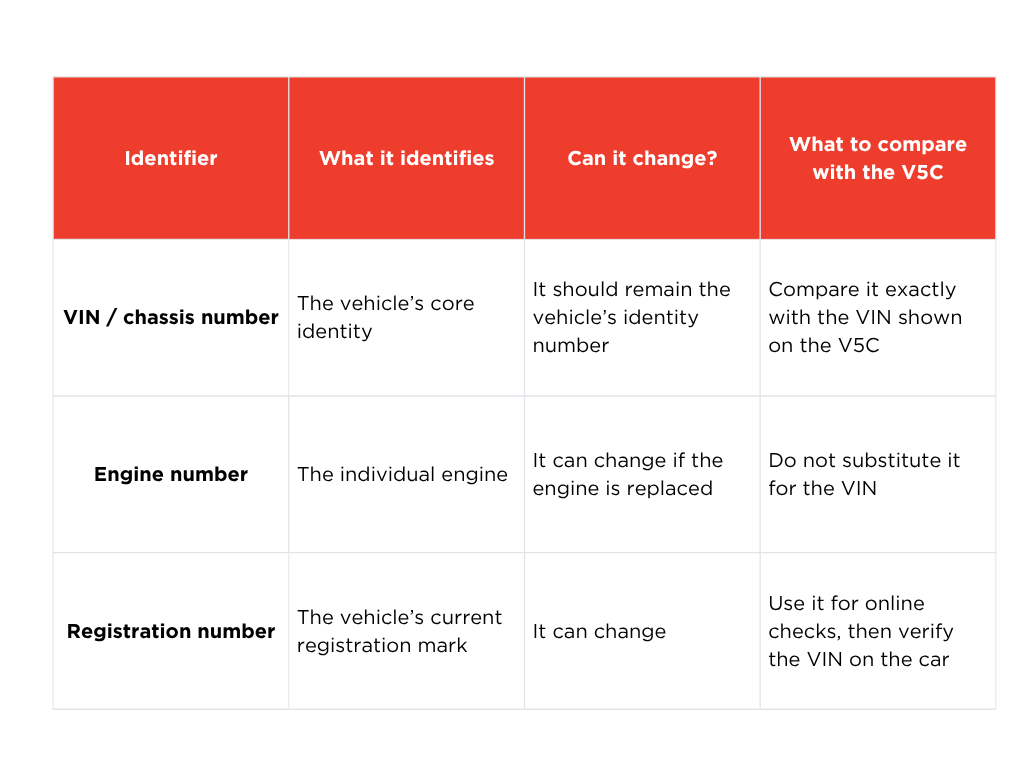
In normal UK usage, VIN and chassis number usually mean the same vehicle identity number. The wording differs, but both refer to the number used to identify the vehicle.
The engine number is different. It identifies the engine fitted to the car, rather than the car’s overall identity. An engine can be replaced during a vehicle’s life, so an engine number should not be used instead of the VIN when you are verifying a vehicle against its V5C.
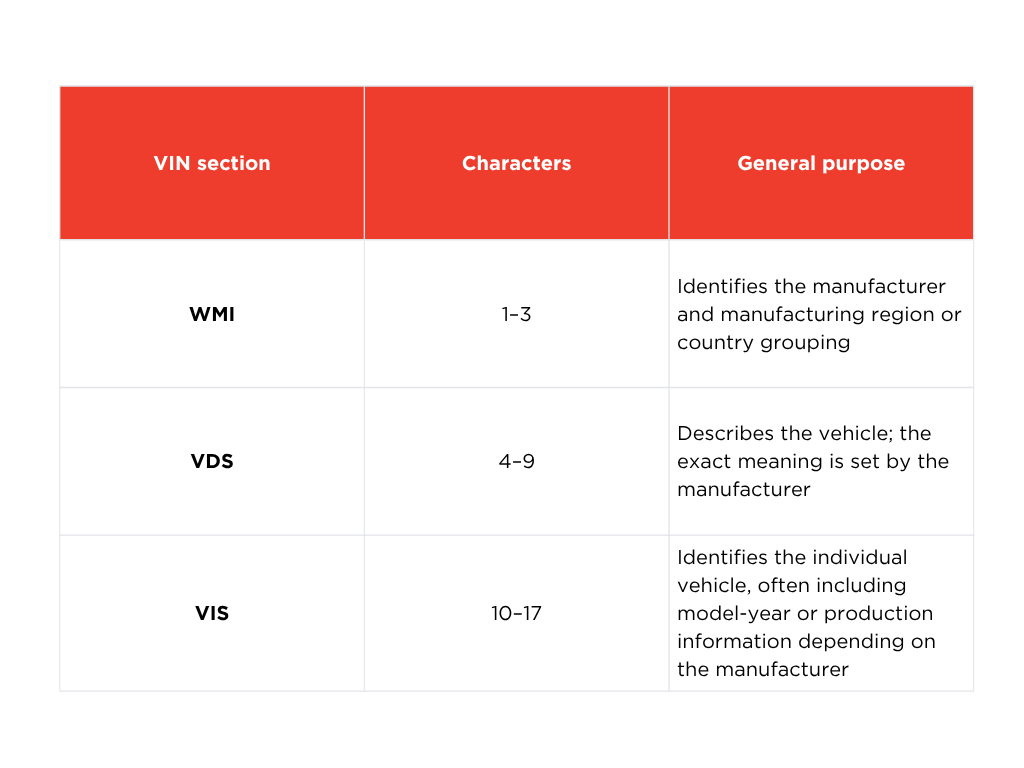
What do the 17 characters in a VIN mean?
Most modern VINs have 17 characters. They are commonly arranged in three sections: the World Manufacturer Identifier (WMI), the Vehicle Descriptor Section (VDS) and the Vehicle Identifier Section (VIS). Together, these sections can identify the manufacturer and describe aspects of the vehicle, while the final section distinguishes that individual vehicle.
A VIN is not a universal code that can always be decoded character-for-character in the same way across every make. If you need model-specific interpretation, use the manufacturer’s documentation or dealer network.
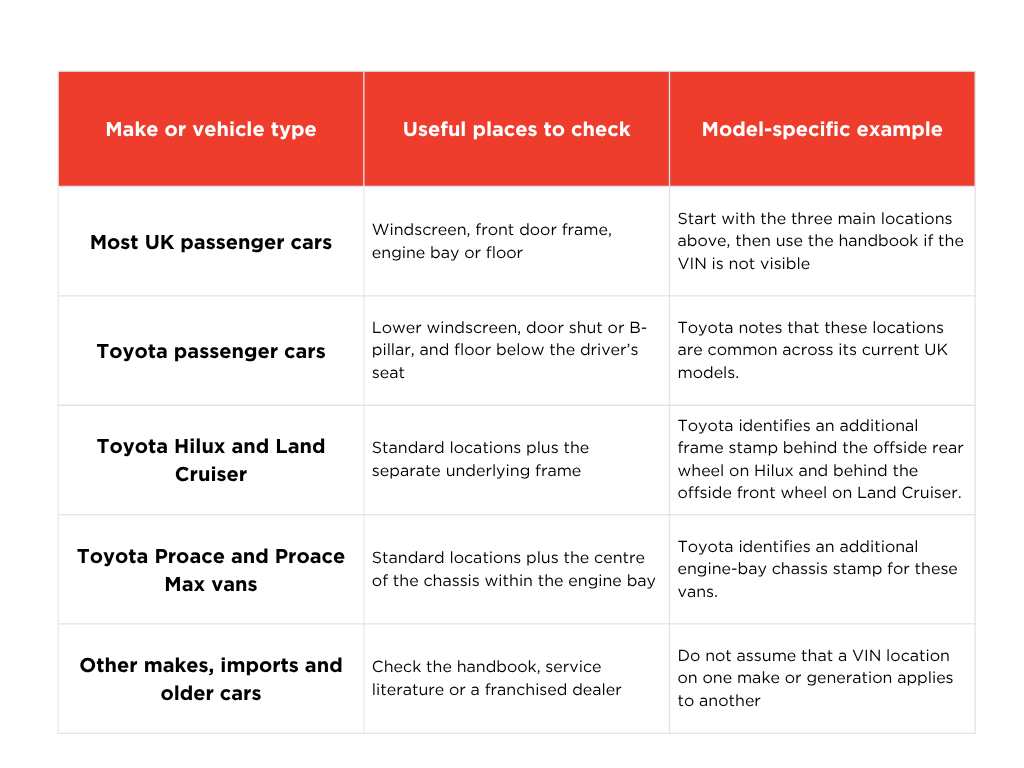
VIN locations can vary by make and model
The three main locations above are a sound starting point, but model-specific layouts matter. This is especially true for vans, 4x4s, imports and vehicles with a separate chassis. The vehicle handbook remains the most reliable guide for a particular make and model.
What should I do if the VIN is missing, damaged or does not match?
Treat a missing, altered, damaged or mismatched VIN as a serious warning sign. Do not buy the vehicle, pay a deposit or complete a sale until the issue is clearly explained and independently checked. Differences can arise for legitimate reasons, such as restoration work or a vehicle identity assessment, but they still need proper documentation.
DVLA states that a vehicle may need assessment where its identity is in question, including where a VIN has been moved. It may issue authority for a replacement VIN after the relevant assessment process.1
Before progressing with a used-car purchase, use the following check.
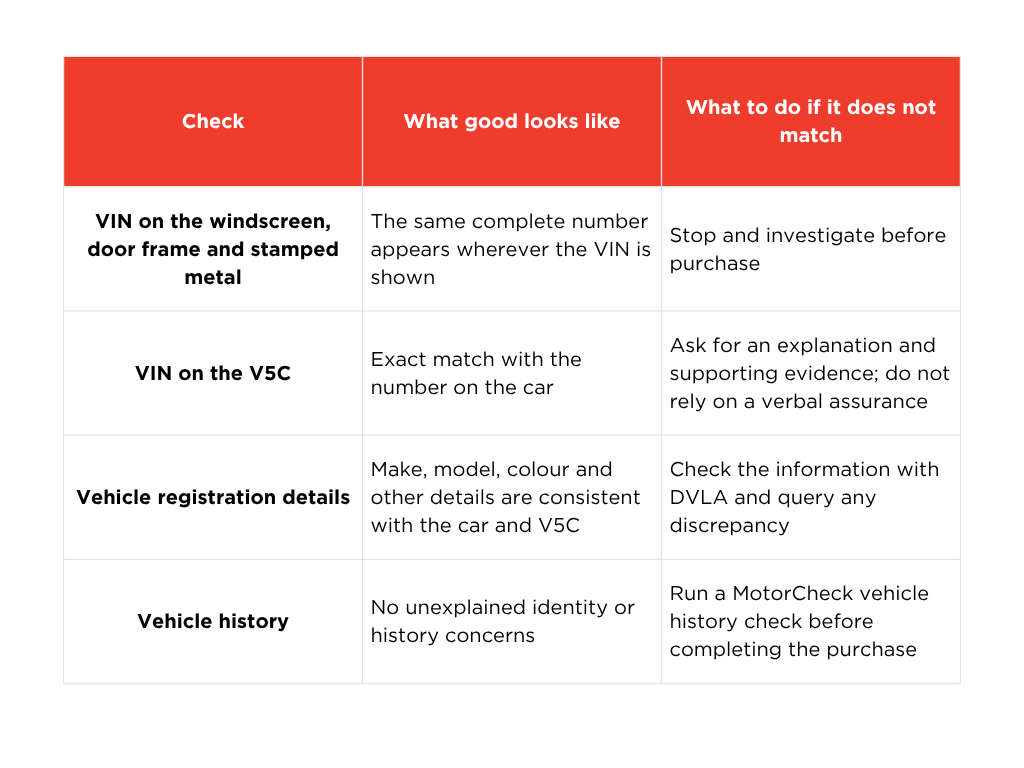
Check a car’s identity before you buy
Finding the VIN takes only a few minutes, but it can help you avoid a costly mistake. Check the number in more than one place on the vehicle, match it to the V5C and ask questions before money changes hands.
When you have completed the physical checks, run a MotorCheck vehicle history check using the registration number. It is a practical next step for reviewing the vehicle’s recorded identity and history before you buy or sell. Finding the VIN takes only a few minutes, but it can help you avoid a costly mistake. Check the number in more than one place on the vehicle, match it to the V5C and ask questions before money changes hands.
Frequently asked questions: Car Vin
Where is the VIN number on a car?
On most cars, check the lower edge of the windscreen, the driver’s door frame and a VIN stamped into the engine bay, floor or chassis. The exact position varies by make and model, so use the handbook if you cannot find it.
Where is the VIN on a V5C logbook?
Look in the vehicle details section of the V5C. The VIN shown there should match the VIN stamped on the car exactly.
Can I find a car’s VIN from the registration number?
A public registration lookup does not display the full VIN. Use the V5C and inspect the car itself, then use the registration number to review relevant vehicle details and history.
Is the VIN number the same as the chassis number?
Usually, yes. In everyday UK use, VIN and chassis number normally refer to the same vehicle identity number. An engine number is different and should not be used instead of the VIN.
How many characters are in a VIN?
Most modern VINs have 17 characters. Older, classic and some imported vehicles may have a shorter identification number.
What should I do if the VIN does not match the V5C?
Do not proceed with the purchase until the difference has been fully explained and independently checked. A mismatch can point to an identity issue, and DVLA may need to assess a vehicle whose identity is in question.
Can I use a VIN to check whether a car has been recalled?
Manufacturers can use the VIN to identify recall eligibility. Check the manufacturer’s official recall service or the GOV.UK recall service, and use the exact VIN from the vehicle or V5C where requested.
Buy your next car with confidence
Get your FREE Car identity Check today
Buy your next car with confidence
Get your FREE Car identity Check today