Here's some rare good news for British motorists: the thing you were told would cost you more money in September didn't. Fuel duty did not go up on the 1st. It is still 52.95p a litre, exactly where it has sat since March 2022, and it stays there until the end of December.
Enjoy that while it lasts, because it is more or less the only motoring bill that hasn't moved this year. Petrol has gone up. Road tax has gone up. And if you are shopping for a used car, there is a whole queue of charges waiting for you that depend on nothing more than the date the car was first registered.
Did fuel duty go up in September 2026?
No. The rise was shelved on 20 May 2026, when Keir Starmer told MPs at Prime Minister’s Questions that duty would stay where it was. The government confirmed shortly afterwards that the temporary 5p per litre cut, first introduced in March 2022, has been extended until 31 December 2026.
Why was fuel duty cut in the first place?
The 5p cut dates back to March 2022, when the government reduced duty from 57.95p per litre in the wake of the Russian invasion of Ukraine, which sent energy prices spiralling. It was meant to last twelve months. It has now been extended at every fiscal event since.
At the November 2025 Budget, the government finally set out how it would unwind the cut: 1p on 1 September 2026, 2p on 1 December 2026, and 2p on 1 March 2027. That is the timetable you will still find quoted in a lot of older articles. It has been superseded.
When will fuel duty actually go up?
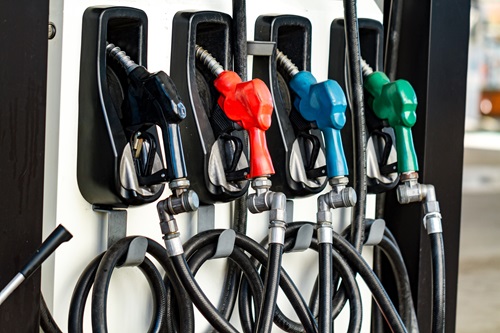
The legislative default is now that rates return to the levels set at Budget 2025 from 1 January 2027. In practice that means a 3p per litre increase on 1 January, then a further 2p on 1 March 2027, taking duty back to the pre-2022 rate of 57.95p.
The government has said it will confirm the final rates at Budget 2026, so this could move again. From April 2027, fuel duty is also due to start rising with RPI inflation each year, which would be the first annual uprating in well over a decade.
Two other things came with the extension. The rebated rate for red diesel was cut by a further 3.7p to 6.48p a litre from 15 June until the end of the year, the lowest it has been in more than twenty years. And hauliers were handed a twelve-month road tax holiday worth up to £912 per vehicle.
How much will the rise cost when it comes?
Because duty is only one part of the pump price. The rest is crude oil, refining margins, the exchange rate and retailer margin, and crude has been volatile all year thanks to the conflict in Iran and disruption around the Strait of Hormuz.
The RAC put the UK average at 167.17p a litre for petrol and 188.63p for diesel on 9 September. By 17 September, figures across 7,881 forecourts had petrol at 171.8p and diesel at 194.8p, with oil trading above $100 a barrel.
Put another way: pump prices rose more in a fortnight than the postponed duty increase would have added over six months. Duty gets the headlines because it is a political decision. The oil market does far more damage and nobody votes on it.
So why is petrol still getting more expensive?
From April 1st this year, the cost of taxing a car has gone up by £5 per year for cars registered after April 2017. That means it now costs £200 a year for a standard year’s road tax (or VED road fund licence to be precise). That applies to all cars; petrol, diesel, hybrid, or electric. Previously, electric cars were free from VED, but not any more. Now, if you buy a new electric vehicle you pay a tiny £10 VED tax in the first year, but from year two of ownership you’re onto the standard £200 rate with no discount.
You may also have to pay extra £440 a year in VED tax from when the car is two years old until it is six years old, if it’s deemed to be an ‘expensive car.’ The point at which that extra tax has to be paid was raised from £40,000 to £50,000 this year, but it’s still a tax that will affect many motorists. In other words, a car that cost £49,999 when it was new will pay £200 a year in VED tax after its first year on the road, but a car that costs £50,001 will be charged £625 for five years, and there’s no allowance for a discount given at the time of buying the car.
What else has gone up for drivers this year?
From 1 April 2026, the standard rate of Vehicle Excise Duty rose from £195 to £200 a year for cars registered after April 2017. That applies to everything: petrol, diesel, hybrid and electric. Electric cars lost their VED exemption last year, so a new EV now pays a token £10 in its first year and then joins the £200 standard rate from year two, with no discount.
The Expensive Car Supplement also went up, from £425 to £440 a year. It is charged on top of the standard rate from the car’s second year until its sixth, so five years in total. The thresholds now differ by fuel type:
- Petrol, diesel, hybrid and plug-in hybrid: £40,000 list price, unchanged.
- Fully electric: raised from £40,000 to £50,000 on 1 April 2026, which takes a lot of mid-priced family EVs out of it.
The cliff edge is evident. A petrol car that listed at £39,999 when new pays £200 a year. The same car listed at £40,001 pays £640 a year for five years, which is £2,200 in extra tax. There is no taper and no allowance for the discount you negotiated, because it is the list price that counts.
What about company cars and London?
For company car drivers, the Benefit in Kind rate on electric cars rose from 3% to 4% in April. Electric is still far cheaper than petrol or diesel on BIK, but the gap is narrowing every year by design.
In London, the Congestion Charge now costs £18 a day and the ULEZ charge is £12.50 a day. Neither is going down.
Is there anything you can do about these car costs?

On fuel, yes, more than you might think. Driving economically, keeping the car properly serviced and keeping tyre pressures correct all have a measurable effect on fuel economy. Where you fill up matters too: the spread between the cheapest and dearest forecourts in the UK runs to tens of pence a litre, and supermarkets consistently undercut branded stations. Since all forecourts are now required to report their prices to the government feed, comparing before you fill is straightforward.
On tax, the levers are different. Most of what you pay is decided before you ever see the car.
Why the registration date matters more than ever
Almost every figure above is triggered by one thing: when the car was first registered, the date stamped on its V5C. Not the year of the plate, not what the advert says, the actual registration date. It decides which tax regime the car sits in, and the differences are enormous.
- A car registered before April 2017 is taxed on CO2 emissions. One emitting under 100g/km pays £20 a year. A car with identical emissions registered in 2018 pays the £200 standard rate, ten times as much, for as long as you own it.
- A car that crossed the Expensive Car Supplement threshold when new carries that surcharge through years two to six, and you inherit whatever is left of it when you buy used. Buying a four year old car in that bracket means two more years at £640.
- For ULEZ, you need Euro 4 for a petrol car, which broadly means 2006 onwards, or Euro 6 for a diesel, which broadly means September 2015 onwards. Get it wrong and it is £12.50 every day you drive into the zone. For someone commuting five days a week, that is around £3,250 a year.
Buyer beware
None of this appears in a used car advert. A seller has no reason to tell you that the car you are looking at sits on the wrong side of an April 2017 line, or that it has two years of Expensive Car Supplement still to run, or that its diesel engine is one emissions standard short of ULEZ compliance.
A MotorCheck report tells you. As well as flagging the things everyone worries about, write-offs, outstanding finance, mileage discrepancies and stolen records, it gives you the exact date of first registration and the emissions data behind it. On a car you are planning to keep for a few years, that one date can be worth more than the haggling.
Fuel duty is frozen until January. Everything else already moved. Know what you are buying before you buy it.
 by
by